Source: Handout / Getty
This article will be continuously updated as George Floyd’s murder is litigated.
UPDATED: 12:15 p.m. ET, Sept. 22, 2022
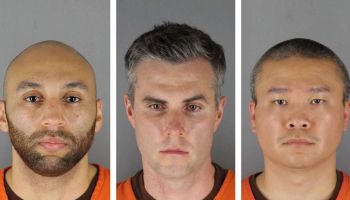
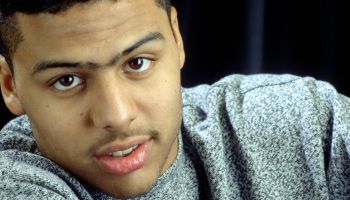
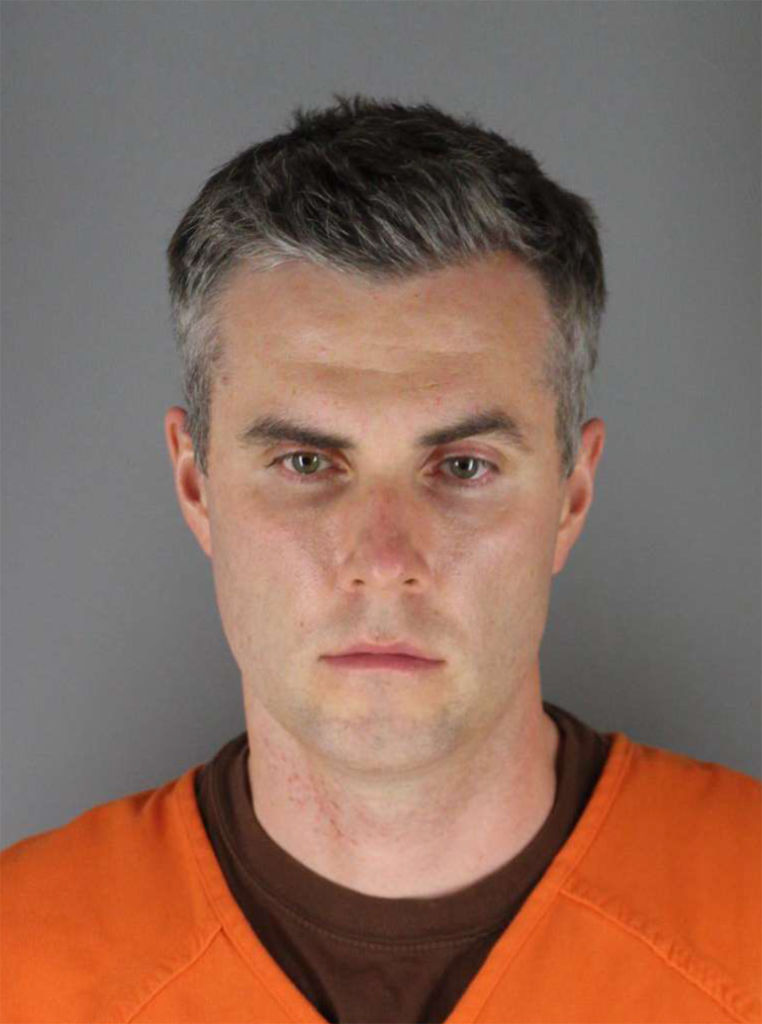
Thomas Lane, one of the three ex-Minneapolis Police officers who accompanied Derek Chauvin during the killing of George Floyd was sentenced to three years in state prison for aiding and abetting second-degree manslaughter.
Lane, who began his 2.5-year federal sentence last month for violating Floyd’s civil rights, agreed to a plea agreement earlier this year and will serve his state sentence concurrently with his federal. During the sentencing hearing, Lane did not address the court. Prosecutors did however take the opportunity to read an impact statement on behalf of the Floyd family.
“We want everyone here today to know we will never move on. You will always show up for George Floyd, but never move on,” read the prosecutor.
In August, former officers Tou Thao and J. Alexander Kueng rejected their plea deals from the state. Both men will stand trial in October. They both were also convicted on federal charges of violating George Floyd’s civil rights. Tou Thao was sentenced to serve 42 months in prison and J. Alexander Kueng was sentenced to serve 36.
During their federal trial, an off-duty firefighter and a Paramedic both testified for the prosecution in the federal case against three former police officers who assisted Derek Chauvin. Both witnesses testified in the Derek Chauvin trial as well.
Minneapolis firefighter, Genevieve Hansen, took the stand and testified that she witnessed Floyd’s head under the knee of Chauvin as other officers helped hold him down. The sight of Floyd struggling to breathe made Hansen angry enough to get loud with the officers.
“It was just alarming, the amount of people that were on top of one person not moving and handcuffed,” said Hansen during testimony. “[Floyd] needed help and he wasn’t getting it.”
Hansen also testified that she asked former officer Thao to check if Floyd had a pulse, but Thao ignored the request and instead told her if she was a firefighter then she knew better than to get involved.
Paramedic Derek Smith testified that as he arrived on the scene, he was never told Floyd wasn’t breathing and had no pulse. When Smith arrived on the scene he recalled not being able to find a pulse in Floyd’s neck and that he was probably deceased. Smith also testified that Floyd should have been given CPR as soon as possible and officers didn’t call in critical information that could have saved Floyd’s life.
At least one witness for the prosecution testified on Tuesday, Jan 25, that he thought George Floyd would die during his fatal encounter with Derek Chauvin in 2020, according to reports from Day 2 of the federal trial against three former Minneapolis police officers accused of violating Floyd’s civil rights.
In addition, at least one of those three former police officers — Tou Thao, Thomas Lane , and J. Alexander Kueng — intends to take the stand in his own defense despite a damning transcript from the day of the murder showing he was angry, aggressive and very hostile with George during the botched arrest.
The prosecution played the video footage from Floyd’s death, prompting witness Charles McMillian to get emotional while viewing it. McMillian was there on the scene when Floyd was killed and can be heard in the video.
On Tuesday, he told the court that it was evident Floyd was going to be killed, the Associated Press reported.
“I knew something bad was going to happen to Mr. Floyd,” McMillian testified.
“What did you mean by that?” prosecutor Allen Slaughter asked.
“That he was gonna die,” McMillian responded.
The Minneapolis Star Tribune reported that defendant Lane plans to take the stand later in the trial.
The transcript from bodycam footage from Floyd’s murder scene shows that Lane was super aggressive toward Floyd despite the nonviolent nature of the alleged offense of using a counterfeit bill at a convenience store.
Those developments followed opening arguments on Monday in which the prosecution and defense presented their cases to the mostly white jury that was selected last week.
The defense’s strategy is clear: Place all the blame squarely on the shoulders of Chauvin, who was the senior officer on the scene that fateful day on May 25, 2020, when the defendants allegedly violated Floyd’s civil rights by aiding and abetting and failing to stop the now-convicted murderer from using lethal force with his knee to the handcuffed Floyd’s neck for nearly nine minutes.
According to the Associated Press, one of the defense attorneys said that Chauvin called “all of the shots” during the encounter with Floyd. The defense also sought to convince jurors that the three defendants were not properly trained by the Minneapolis Police Department and did not know they were supposed to intervene.
However, Samantha Trepel — a prosecutor with the DOJ’s civil rights division — countered with facts like how Thao, Lane, and Kueng were all certified in CPR and saw Floyd dying yet did nothing to prevent his death.
“We will ask you to hold these men accountable for choosing to do nothing and watch a man die,” Trepel told the jury.
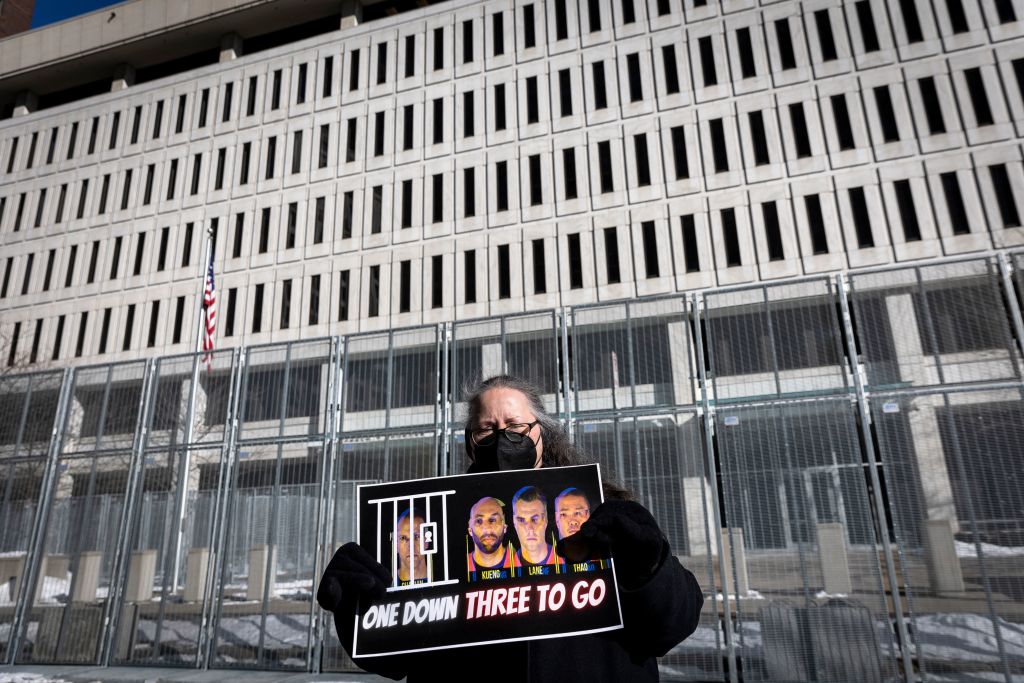
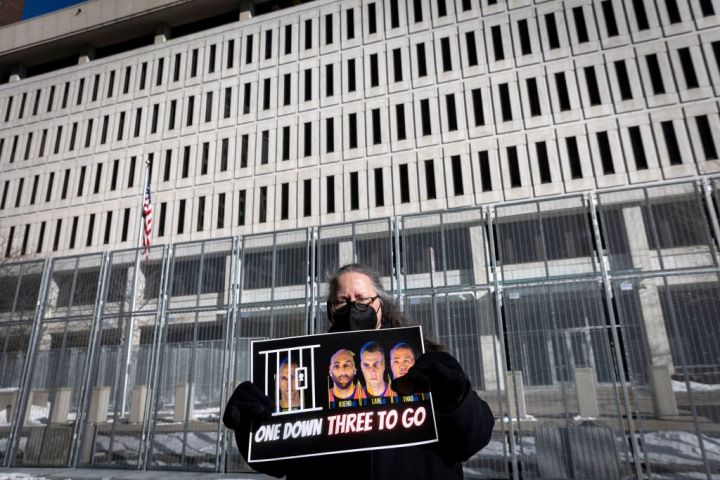
A community activist holds a placard during a press conference outside the U.S. District Court in St. Paul, Minnesota, on January 20, 2022, for the jury selection of three former Minneapolis police officers charged with federal civil rights violations in George Floyd’s death. | Source: KEREM YUCEL / Getty
Guilty verdicts will be returned if the prosecution proves the defendants’ inaction was intentional on their individual parts.
Of the 18 people selected for the jury, including six alternates, all have been described as white people except for two people who appear to be of Asian descent.
U.S. District Judge Paul Magnuson has reportedly insisted that the case has nothing to do with race, an assertion he made to a potential Black juror who questioned if he could be impartial “due to my color.”
“There is absolutely nothing about the subject of religion, race, or ethnicity that’s involved in this case,” Magnuson said. Suffice it to say, the potential Black juror was dismissed.
The federal trial for the three former officers begins a little more than a month after Chauvin officially pleaded guilty to a pair of federal civil rights charges stemming from his murder of Floyd and a separate incident in which the former Minneapolis police officer injured a Black teenager.
Following the federal trial, Thao, Lane, and Kueng will have to face a state criminal trial for aiding and abetting murder and manslaughter. That trial has been rescheduled to begin in June.
Keep reading to find a detailed timeline of the efforts at justice for the murder of George Floyd.
Chauvin’s state trial
On April 20, 2021, Chauvin was unanimously found guilty of second-degree unintentional murder, third-degree murder, and second-degree manslaughter for killing Floyd. He was immediately handcuffed and remanded to prison from the courtroom following the reading of the verdict.
The jury took about 10 and a half hours to reach a verdict since beginning deliberations following closing arguments from the prosecution and the defense.
Cahill read the verdict aloud.
Prior to Cahill reading the jury their deliberations instructions, prosecutor Steve Schleicher strategically supplemented his closing remarks with video footage of Floyd’s death that emphasized Chauvin’s refusal to stop kneeling while cavalierly putting his hands in his own pockets.
“This case is exactly what you thought when you saw it first,” prosecutor Steve Schleicher told the jury, referring to the viral video showing Floyd’s death on Memorial Day last year. “It’s exactly what you saw with your eyes. … It’s what you felt with your gut. It’s what you now know in your heart. This wasn’t policing. This was murder.”
Eric Nelson, Chauvin’s lead lawyer, followed that with a lengthy closing argument that attempted to place doubt about the medical examiner’s resolute declaration and testimony that Floyd’s manner of death was a homicide.
“A reasonable doubt is a doubt that is based on reason and common sense,” Nelson said before adding later in his closing arguments: “This was an authorized use of force, as ugly as it might be, and this was reasonable doubt.”
The closing remarks were so lengthy, in fact, that Cahill had to intervene in order to allow the jury a chance to eat lunch after 2 p.m. local time.
The defense and prosecution officially rested their cases after Chauvin, 45, spoke for the first time during the trial to officially decline the opportunity to testify in his own defense. That prompted the prosecution to re-examine one of its star witnesses — pulmonologist Dr. Martin Tobin — in an effort to further discredit unproven theories offered up one day earlier by pathologist Dr. David Fowler testifying for the defense about Floyd’s cause of death.
After Cahill warned of a potential mistrial if Tobin “even mentions” the existence of tests that the prosecution failed to disclose in a timely fashion showing that Floyd had a normal carbon monoxide level. Doing so, Cahill said, would prejudice Chauvin. Still, Tobin cited it almost as soon as he took the stand, prompting Cahill to call an immediate sidebar, but not calling a mistrial.
Fowler previously testified that Floyd could have died from a number of factors that had nothing to do with Chauvin’s knee, including introducing the wild possibility that carbon monoxide poisoning from a police vehicle idling played an outsized role in the death. The prosecution quickly debunked Flowler’s theories while cross-examining him, but they still did their due diligence by calling Tobin to the stand to have an actual expert address add clarity and context to those claims.
https://twitter.com/ReportsDaNews/status/1382429285852545024?s=20
Prosecutors rested their case after calling at least 40 witnesses.
Chauvin’s attorneys have been clinging to their narrative that Floyd died from anything other than excessive force, including a possible fentanyl overdose. Among the defense’s witnesses was a former officer who interacted with Floyd during a 2019 arrest during his struggle with substance abuse, a paramedic who administered aid to Floyd during the 2019 arrest, and a woman who was with Floyd on the day he was killed by police.
Cahill told jurors the evidence presented from the previous arrest was not to serve “as evidence of the character of George Floyd,” but to show the effects of opioids on the body.
Barry Brodd, a former police officer and use-of-force expert called by the defense, attempted to poke holes in the prosecution’s theory, stating that he believed Chauvin’s actions were “justified” and objectively reasonable because he feels Floyd was resisting arrest.
“I felt that Derek Chauvin was justified, was acting with objective reasonableness, following Minneapolis Police Department policy and current standards of law enforcement in his interaction with Mr. Floyd,” Brodd said.
A second disturbing testimony came when Officer Peter Chang, who also responded to the scene on May 25, told the jury that he was “concerned for the officers’ safety,” in reference to the crowd that gathered. Chang’s body camera footage was submitted as evidence, showing a different vantage point.
Chang also said he was worried because the crowd became “very aggressive.”
Judge Cahill denied the defense’s request to sequester the jury in fear that the nearby police shooting of Daunte Wright could sway their opinion.
Philonise Floyd, Floyd’s brother, took the stand on Day 11 of the trial to help provide the jury with evidence pertaining to “spark of life doctrine” testimony.
Philonise understandably became emotional when talking about his brother and their upbringing in North Carolina. Philonise stated that George was known to be a “mommas boy,” and became inconsolable after losing their mother in 2018. The testimony harkened back to one of Floyd’s last moments where he cried for his mother as he took his last breaths under the weight of Chauvin’s knee.
Two more experts testified on behalf of the defense, adding that Floyd’s death was not caused by a drug overdose and that Chauvin’s used an “unacceptable or reasonable use of force,” as he restrained Floyd.
Earlier, the second week of the Chauvin’s murder trial concluded April 9 with testimony from more medical experts regarding Floyd’s cause of death, including Dr. Andrew Baker, the medical examiner for Minnesota’s Hennepin County, who told the courtroom that fentanyl and heart disease did not directly contribute to Floyd dying.
“In my opinion, the law enforcement subdual, restraint and the neck compression was just more than Mr. Floyd could take by virtue of those heart conditions,” Baker stated early in his testimony.
Baker ruled Floyd’s death a homicide, caused by “cardiopulmonary arrest complicating law enforcement subdual, restraint, and neck compression.”
Other expert witnesses for the prosecution testified about whether Chauvin’s use of excessive force fell within the MPD’s policy.
The defense continued a line of questioning based on whether George Floyd’s reported drug use caused his demise and if the crowd restricted Chauvin’s ability to render Floyd aid.
Many observed that the “blue wall of silence” may be crumbling Chauvin at the conclusion of Day 8 following expert testimony from Jody Stiger, a Los Angeles Police Department sergeant who took the stand for the prosecution and said that after reviewing video evidence, he concluded that Chauvin knelt on Floyd’s neck for the entirety of the time of when officers restrained Floyd on the ground, to when EMT’s arrived.
Controversy also ensued over defense lawyer Eric Nelson who alleged that Floyd yelled out “I ate too many drugs” during his arrest. Multiple witnesses told the defense that they could not make out that phrase on the video.
On social media, many noted that the audio was too difficult to describe and admonished the defense for inferring something that was not definite. Observers believe that Floyd is actually saying, “I ain’t do no drugs.”
The second week of Chauvin’s murder trial included two important testimonies regarding the medical procedures, or the possibilities of the lack of procedures, administered at the scene of George Floyd‘s death, as well as whether Chauvin operated within the policies regarding the use of excessive force.
Dr. Bradford Langenfeld, the medical professional who pronounced Floyd dead after trying to resuscitate him opened Day 6 and testified that Floyd’s heart most likely stopped due to a lack of oxygen. Langenfeld said that when Floyd was brought to Hennepin County Medical Center, he was not made aware of any efforts made at the scene by bystanders or police to resuscitate. Langenfeld said the chance of a patient’s survival goes down 10 to 15 percent every minute CPR is not performed.
Minneapolis Police Chief Medaria Arradondo, a veteran of the force after joining the Minneapolis Police Department in 1989, said he believed Chauvin’s actions directly violated the standing policy.
“That action is not de-escalation,” Arradondo said. “And when we talk about the framework of our sanctity of life and when we talk about our principles and the values that we have, that action goes contrary to what we are talking about.”
Day 4 of Chuavin’s trial brought forth multiple new revelations about Floyd’s personal life as well as the protocol that the former Minneapolis police officer accused of murder was expected to follow.
Courteney Ross, who identified herself as Floyd’s girlfriend, provided poignant testimony about their relationship and offered crucial insight into her drug use. She said they used opioid pills together and discussed how they tried and failed on multiple occasions to break their addictions.
Ross painted a picture of Floyd that showed a God-fearing, kind and loving family man who was battling his own demons — the antithesis of how the defense is portraying him. Calling Ross to the stand was a successful exercise in both humanizing Floyd and pushing back against the narrative of a violent drug addict, legal analysts said.
After two EMT’s testified about arriving at the scene to find Chauvin and other officers on top of Floyd, the police supervisor who was working May 25 took the stand and addressed the controversial knee restraint the defendant employed.
David Pleoger, who has since retired from the Minneapolis Police Department, said Chauvin initially told him Floyd was going “crazy [and] wouldn’t go in the back of the squad.” But then Pleoger dealt the latest blow to the defense when he undermined their entire strategy of blaming Floyd for his own death.
“When Mr. Floyd was no longer offering up any resistance to the officers, they could have ended their restraint,” Pleoger testified after the prosecution asked him whether Chauvin used excessive force by kneeling on Floyd’s neck for more than nine minutes.
That testimony followed prosecutors playing yet additional video that was previously unseen to the public, prompting a series of emotional breakdowns from witnesses who provided damning testimony against the defendant.
Among the revelations presented in court was Chauvin’s stated justification of kneeling on Floyd’s neck for more than nine minutes — the action that led to the former Minneapolis police officer’s murder charge.
One of the most compelling witnesses to take the stand was 61-year-old Charles McMillian, a community resident who did not know Floyd but carried on a brief conversation with him during the fateful arrest last May 25. McMillian, who was shown on surveillance video as well as bodycam footage from the multiple officers involved, pleaded with Floyd to calm down. As the footage was replayed in court, McMillian broke down crying and needed to take a brief break before his testimony resumed because he said he felt “helpless.”
Another witness, Christopher Martin, was working as a cashier at the Cup Foods store where Floyd is accused of trying to use a counterfeit $20 bill. Martin testified that he carried “guilt” with him because he is the one who notified the store’s manager of the bill before police were notified.
“If I would have just not taken the bill, this could have been avoided,” Martin said.
Martin and McMillian were just the latest witnesses who have played a crucial, yet heartbreaking role for the prosecution in the murder trial. Their testimonies came one day after other eyewitnesses, including first responders and local residents who watched as Floyd took his final breath.
Former MMA fighter Donald Williams previously supplied compelling testimony with a contentious exchange with Chauvin’s attorney.
During the questioning, Nelson attempted to drill down Williams, who thwarted the attempt at every turn. Social media users marveled at the harsh dual reality of Williams’ restraint while reliving the trauma of watching a man die.
Williams was seen emotional on the stand after playback of the 911 call he made reporting that he “witnessed a murder.”
Darnella Frazier, the Minneapolis teen who filmed the chilling footage of Chauvin kneeling on Floyd’s neck, recounted her daily trauma in the courtroom.
“There have been nights I stayed up apologizing and apologizing to George Floyd for not doing more and not physically interacting and not saving his life,” she said. “But it’s like not what I should have done, it’s what he (Chauvin) should have done.”
In another emotional moment, Frazier’s nine-year-old cousin took the bench and shared she was disappointed in Chauvin’s response when she saw him kneeling on Floyd.
And an off-duty firefighter said that she felt obligated to stay around the crime scene after Floyd died in order to protect witnesses from the police.
Day 1 got off to a fast start with the prosecution and defense making their dueling opening arguments, making it apparent the different directions each legal team prefers. The day saw a couple of compelling witnesses as well as one underwhelming one while each side tries to build a case that fits their respective narratives.
For the defense, its plan is clear: To blame Floyd’s death on the drugs they say he was on at the time of his arrest and downplay Chauvin’s involvement, which came in the violent form of a knee applying pressure to the unarmed, handcuffed Black man’s neck as he was pinned facedown on a street. Chauvin’s defense lawyers say he was simply abiding by his training and should not be held accountable for enforcing the law the way he was instructed to.
The prosecution countered those claims by immediately showing the jury the video of Floyd’s arrest, including new footage, seemingly frame by frame to hammer home their stance that Chauvin intentionally killed the man who was only suspected of passing a counterfeit bill, a decidedly nonviolent offense.
Several witnesses were called, including a 911 dispatcher who was able to witness Floyd’s death in real-time from surveillance footage filming across the street from the scene. The dispatcher, Jena Scurry, she said at one point she was concerned that the screen froze — a reference to how long Chauvin kneeled on Floyd’s neck while casually putting his hands in his pockets as onlookers warned of impending death.
Another witness, Alysha Oyler, was working across the street at a gas station when Chauvin and four other Minneapolis cops tried to arrest Floyd. Oyler eventually got closer and recorded the scene on her phone. However, despite her vantage point, Oyler repeatedly said she couldn’t remember specifics and laughed several times awkwardly during moments that were absent of humor. Her testimony didn’t seem to contribute much, if anything, to the prosecution as the defense likely reveled in her court appearance.
The final witness of Day 1, however, was widely credited for his testimony that fell in line with the seeming consensus that Chauvin knew what he was doing and wanted to kill Floyd. Donald Williams III, a mixed martial artist who the prosecution established as an expert witness, described the neck restraint employed by Chauvin as deadly. He was one of the people who gathered at the scene outside of the store where the arrest was taking place and verbally warned all of the officers, including Chauvin, that Floyd would die if he didn’t ease up the pressure from his neck. In what seemed like a pivotal moment in the trial even though it was only the first day, Williams said he saw Floyd “slowly fade away.”
Jury selection for the case was completed last week.
The fate of Chauvin, who was seen on video casually applying what appeared to be deadly pressure to Floyd’s neck for about nine minutes on May 25, now rests in the hands of a 15-person panel that includes three Black men, one Black woman and two women identified as being of “mixed-race.” The other nine jurors, including alternates, are white.
Members of Floyd’s family met with civil rights leaders for a prayer service that included calls for peace during and after the trial.
Rev. Al Sharpton, who was at the vigil at Greater Friendship Missionary Baptist Church in Minneapolis, urged people to take a knee, according to the local Fox News affiliate.
“For 8 minutes and 46 seconds, we are going to take a knee in front of the courthouse to show the world how long it took for Chauvin to have his knee on that neck,” Sharpton said. “People didn’t understand how long that was,” he continued. “Until they stood.”
Multiple references to the video of Floyd’s arrest were made during the vigil, the Minneapolis Star-Tribune reported.
“I have faith that he will get convicted,” Floyd’s brother Philonise said of Chauvin. “Just like everybody who’s seen that video because the video is the proof.
However, yet another video of Chauvin and Floyd will also be relevant in the trial. That other footage came from a separate encounter between the two men in 2019 during a different traffic stop in which Floyd was accused of drug possession. While critics argue that the footage is irrelevant, Hennepin County District Judge Peter Cahill sided with defense attorneys “that the incident was relevant in that it offers proof of how Floyd’s body responded to drugs he admitted he had taken,” the Washington Post reported.
Cahill has made multiple rulings that have already affected the case’s trajectory, including previously denying a motion to delay or move the trial.
“Unfortunately, I think the pretrial publicity in this case will continue no matter how long we continue it. Perhaps some of it may, with time, be forgotten by people,” Cahill said at the time. “And as far as change of venue, I do not think that that would give the defendant any kind of a fair trial beyond what we are doing here today.”
That ruling followed Chauvin’s attorneys filing the motion as a result of a $27 million Minneapolis city settlement for George Floyd’s family.
Two jurors were ultimately dismissed over concerns that their impartiality could be tainted by that multi-million dollar settlement. One juror was a white man in his 30s while another was a Hispanic man in his 20s. The dismissal of two jurors is notable but also hints that the perceived fallout over the settlement did not have as large of an effect as thought.
“I don’t think there is any place in the state of Minnesota that has not been subjected to extreme amounts of publicity on this case,” Cahill said for that ruling.
Cahill also reinstated the third-degree murder charges that he previously dismissed against Chauvin. That charge has been added to the second-degree unintentional murder and second-degree manslaughter Chauvin was already facing.
The additional charge carries a maximum penalty of up to 25 years in prison and increases the likelihood of a conviction on at least one of the charges.
Cahill’s decision was a reversal from his ruling in October to drop the charges on a legal technicality. For the third-degree murder charges to stick, the law requires that someone cause the death of another person while committing an act inherently dangerous to others. After an appeals court ruled against Cahill’s decision in October, Cahill changed his stance and reinstated the charge.
Jury selection was initially paused on March 8 to allow Cahill to weigh that additional charge.
Everybody can agree that justice for Floyd is the primary objective of Chauvin’s murder trial. But whether that justice can actually be achieved is a completely different story — even with the damning evidence of a viral video showing Chauvin, hands in his pockets, almost shrugging while staring indifferently at witnesses warning that he was killing Floyd, and the momentum of a racial reckoning sparked by the death on Memorial Day.
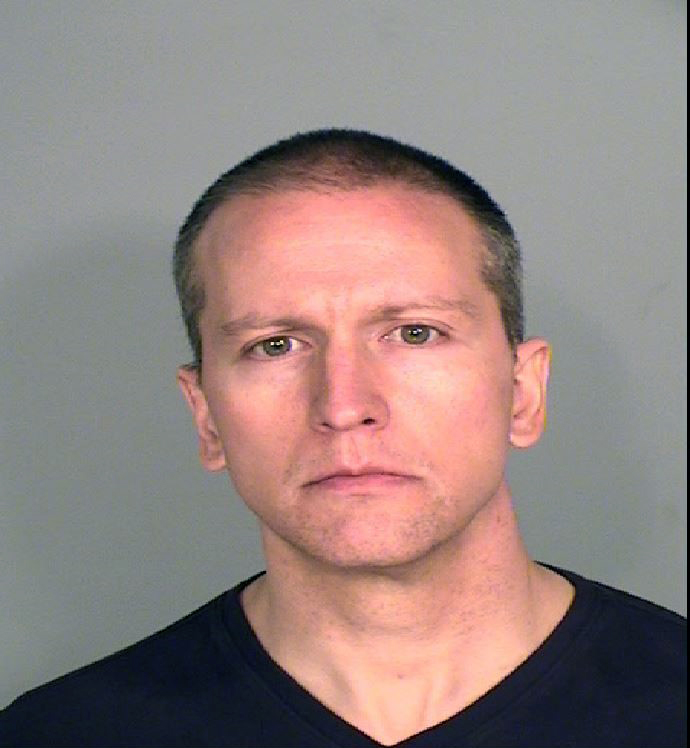
Derek Chauvin. | Source: Handout / Getty
If you’re looking for footage of the killing, you won’t find it here.
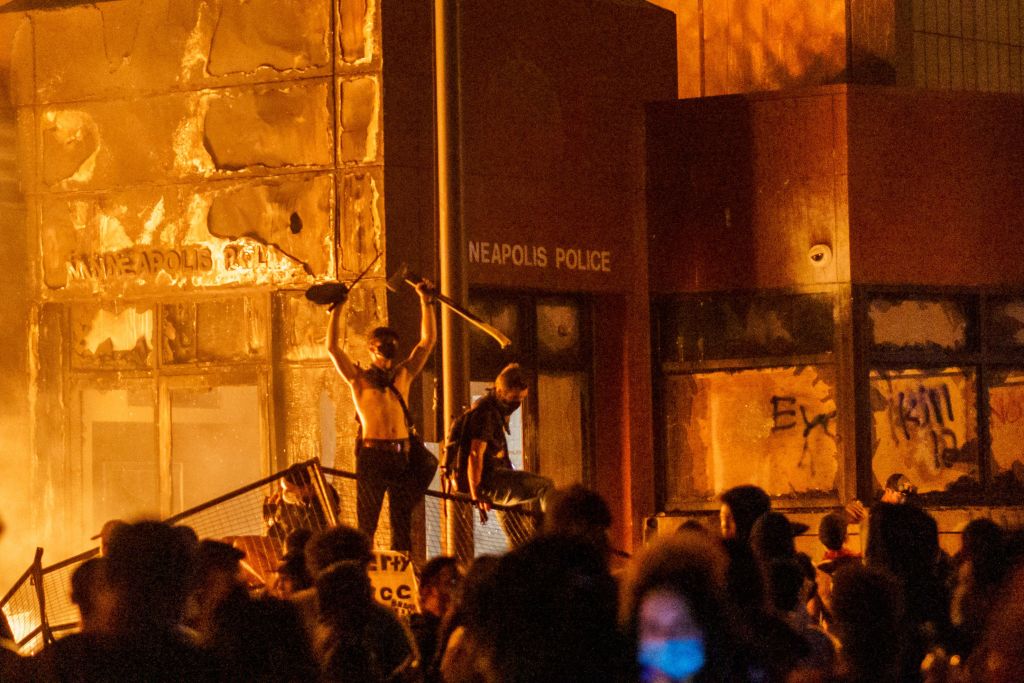
But that fateful moment has prompted a wave of protests demanding change to policing in America in order to invest in the Black and brown communities that are disproportionately affected by law enforcement.
Source: KEREM YUCEL / Getty
Earlier this month, the House passed the George Floyd Justice In Policing Act, sweeping legislation that reimagines how police departments operate through accountability and transparency.
Most relevant to Chauvin’s murder trial, the George Floyd Justice In Policing Act aims to hold police accountable in part by collecting data about officers accused of misconduct and worse behavior. Chauvin, who turned 45 on March 19 and has pleaded not guilty, has a history of using brutal neck restraints, other suspects have claimed.
Advocates say Chauvin shouldn’t even have been working as a police officer on Memorial Day considering his violent past. The Minnesota Attorney General’s Office is hoping to introduce these claims as evidence of a pattern of Chauvin’s renegade style of policing that also appeared to kill Floyd.
Adding insult to literal injury, Chauvin has a notable history of being placed on leave for officer-involved shootings and he remains the subject of “a dozen police conduct complaints that resulted in no disciplinary action.” During his 19-year-career, Chauvin was praised for valor by his department, even after shooting a Black man back in 2008 who survived the shooting.
Cahill in October upheld the most serious murder charge against Chauvin in Floyd’s death.
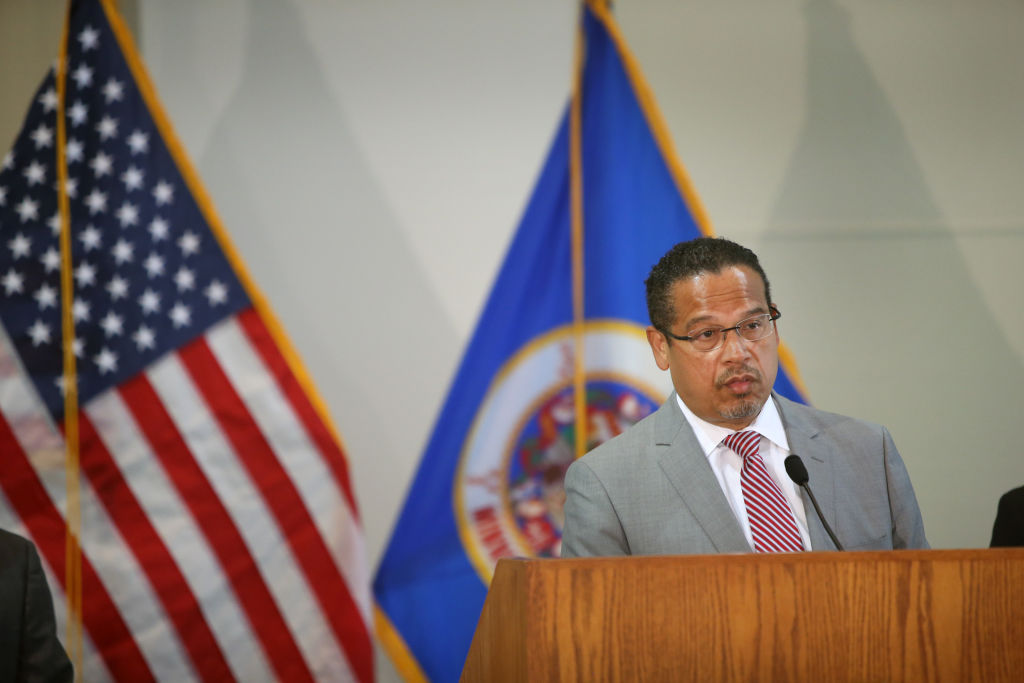
Minnesota Attorney General Keith Ellison’s office is prosecuting Derek Chauvin’s murder trial. | Source: Scott Olson / Getty
NewsOne will be constantly updating this file as efforts to bring justice for George Floyd progress. Check back for developments and keep reading to find compelling photos, video and other key moments from the trial.
The post Justice For George Floyd: A Timeline Of Cases Against The Ex-Cops Involved In His Death appeared first on NewsOne.
Justice For George Floyd: A Timeline Of Cases Against The Ex-Cops Involved In His Death was originally published on newsone.com
1. July, 27, 2022
2. Jan. 24, 2022
 Source:Getty
Testimony was set to begin on Jan. 24 in the federal case of three former Minneapolis police officers charged with federal civil rights violations in George Floyd’s death. The trial begins days after a mostly white jury was selected.
Pictured: A community activist holds a placard during a press conference outside the U.S. District Court in St. Paul, Minnesota, on January 20, 2022, during jury selection.
3. Dec. 13
Derek Chauvin officially pleaded guilty to a pair of federal civil rights charges stemming from his murder of George Floyd and another incident in which the former Minneapolis police officer injured a Black teenager.
Previously, Chauvin — who was found guilty and convicted in April of murdering Floyd by kneeling on the unarmed, handcuffed Black man’s neck for nearly nine minutes last year — had implausibly maintained his innocence in that case and was seemingly set to do the same in the federal case before he likely realized it was only a matter of time before a different jury found him guilty, as well.
The Department of Justice announced Chauvin’s guilty plea in an email sent to NewsOne.
“Defendant Chauvin has pleaded guilty to two federal civil rights violations, one of which led to the tragic loss of George Floyd’s life,” Attorney General Merrick Garland said in a brief statement. “While recognizing that nothing can repair the harm caused by such acts, the Justice Department is committed to holding accountable those who violate the Constitution, and to safeguarding the civil rights of all Americans.”
Chauvin also pleaded guilty to violating the civil rights of a Black 14-year-old boy who was violently restrained by the throat while being assaulted in the head with a flashlight in 2017.
4. June 25 – Chauvin is sentenced
Derek Chauvin’s longshot request for a new trial was denied ahead of his prison sentencing of 22.5 years. Hennepin County Judge Peter Cahill delivered the sentence after members of George Floyd’s family and prosecutors appealed for the convicted murderer to get considerably more prison time than state guidelines advise.
Deciding against adjudicating the two lesser charges that Chauvin was facing, Cahill said the one count of unintentional second-degree murder for which he was sentencing included 10 additional years for aggravating factors, including employing “particular cruelty.”
Arguing that Chauvin’s crime is “more serious than the typical second-degree unintentional murder,” prosecutors asked for Cahill to sentence the former police officer to 360 months, which equals 30 years.
Chauvin, who did not testify at his trial, broke his silence ahead of his sentencing and briefly addressed the court with a statement that offered his “condolences” to the Floyd family before he added cryptically, “There’s gonna be some other information in the future that will be of interest and I hope things will give you some peace of mind.”
5. May 4
More than a week after Derek Chauvin was found guilty of murdering George Floyd, the convicted former Minneapolis police officer filed a motion for a new trial and alleged there was jury misconduct. Chauvin’s lawyer claims the defense was denied the right to a change in venue despite pre-trial publicity that affected the ability to have a fair trial.
The motion was filed on Monday and followed reports that the only juror who has spoken publicly about the trial may have lied during jury selection.
The juror, Brandon Mitchell, made the media rounds last week to discuss his experience serving during the murder trial. But now he’s found himself on the defense following reports that he participated in an anti-police brutality march last summer that was inspired in part by Floyd’s death.
All of that came on the heels of U.S. Attorney General Merrick Garland announcing the launch of a Justice Department probe into the Minneapolis Police Department.
6. May 3
7. April 28
8. April 21
The investigation echoes similar steps taken after Michael Brown‘s killing in Ferguson, Missouri, after the DOJ declined to charge his accused murderer, Officer Darren Wilson.
Garland’s announcement detailed the lengths of the investigation, which will examine police practices, especially involving excessive use of force, and whether or not the department participates in discriminatory practices, along with probing misconduct allegations.
The DOJ has already launched an investigation into George Floyd‘s murder to determine if his civil rights were violated. It is unclear if the new probe will look at the department prior to Floyd’s death or while the case was ongoing.
9. April 20 – Guilty
On April 20, Chauvin was unanimously found guilty of second-degree unintentional murder, third-degree murder and second-degree manslaughter for killing Floyd. He was immediately handcuffed and remanded to prison from the courtroom following the reading of the verdict.
The jury took about 10 and a half hours to reach a verdict since beginning deliberations following closing arguments from the prosecution and the defense.
Prior to Cahill reading the jury their deliberations instructions, prosecutor Steve Schleicher strategically supplemented his closing remarks with video footage of Floyd’s death that emphasized Chauvin’s refusal to stop kneeling while cavalierly putting his hands in his own pockets.
“This case is exactly what you thought when you saw it first,” prosecutor Steve Schleicher told the jury, referring to the viral video showing Floyd’s death on Memorial Day last year. “It’s exactly what you saw with your eyes. … It’s what you felt with your gut. It’s what you now know in your heart. This wasn’t policing. This was murder.”
10. April 19
The defense and prosecution officially rested their cases after Chauvin spoke for the first time during the trial to officially decline the opportunity to testify in his own defense. That prompted the prosecution to re-examine one of its star witnesses — pulmonologist Dr. Martin Tobin — in an effort to further discredit unproven theories offered up one day earlier by pathologist Dr. David Fowler testifying for the defense about Floyd’s cause of death.
11. April 18
 Source:Getty
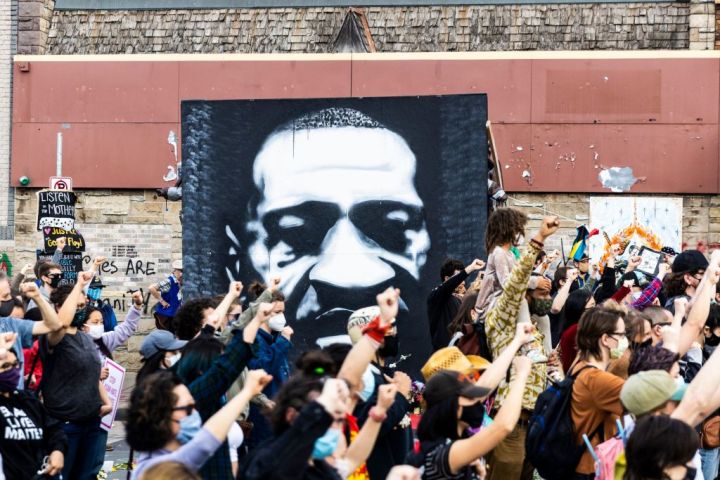
People raise their fist during a demonstration near the George Floyd Memorial in Minneapolis.
12. April 17
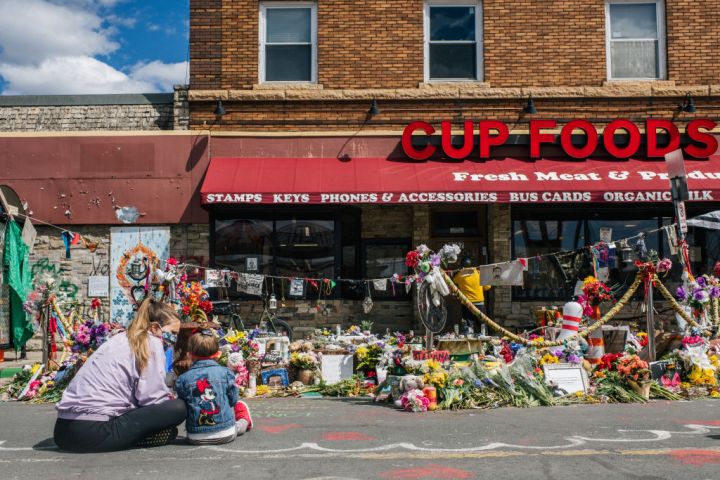 Source:Getty
13. April 16
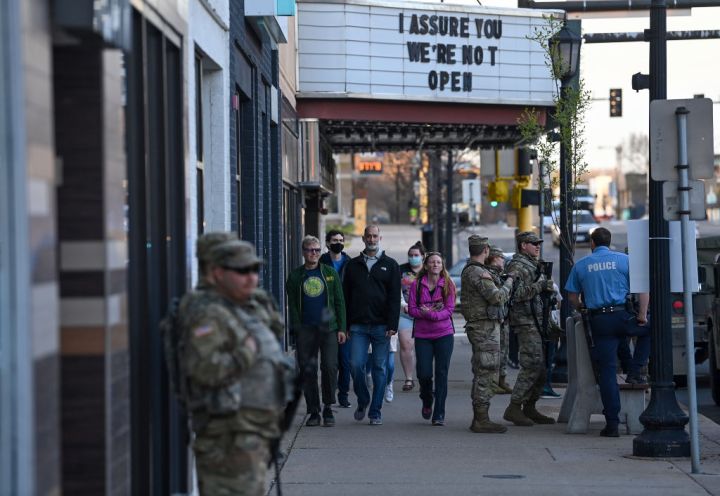 Source:Getty
Members of the National Guard have been patrolling Minneapolis since the trial began and ahead of the verdict.
14. April 15
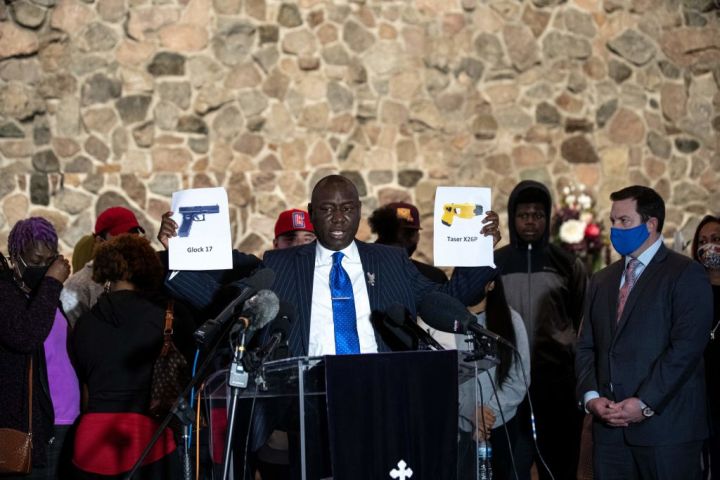 Source:Getty
George Floyd’s family joins Ben Crump during a press conference at New Salem Missionary Church in Minneapolis after the prosecution and defense rested their cases. Crump was bringing attention to the recent police shooting of Daunte Wright in the nearby Brooklyn Center. Wright was killed when a police officer claimed she fired her gun by mistake and meant to shoot her Taser instead. Al because of a traffic stop for a nonviolent allegation.
15. April 14
16. April 13
17. April 13
18. April 13
19. April 13
20. April 12
21. April 12
22. April 12
23. April 12
24. April 9
25. April 9
26. April 9
27. April 9
28. April 8
29. April 8
30. April 8
31. April 8
32. April 7
33. April 6
34. April 5
35. April 5
36. April 1
37. April 1
38. April 1
39. April 1
40. March 31
41. March 31
42. March 30
43. March 30
44. March 30
45. March 30
46. March 29
47. March 29
48. March 29
49. March 29
50. March 28
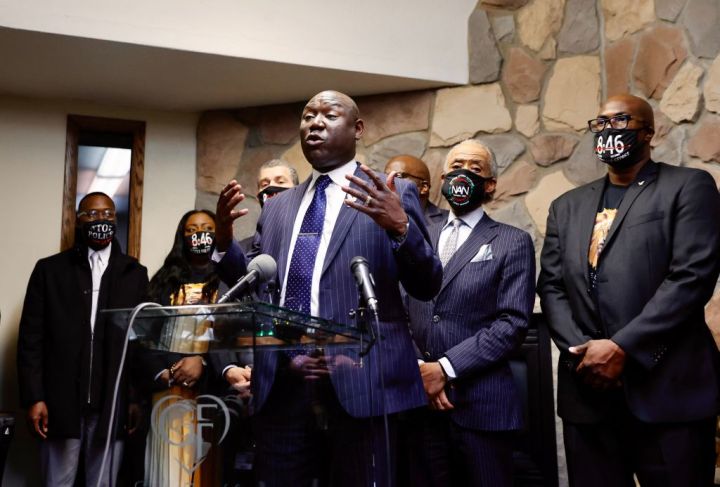 Source:Getty
Attorney Ben Crump, flanked by Rev. Al Sharpton and the Family of George Floyd, speaks during a press conference demanding justice in the upcoming trial in Minneapolis.
51. March 28
 Source:Getty
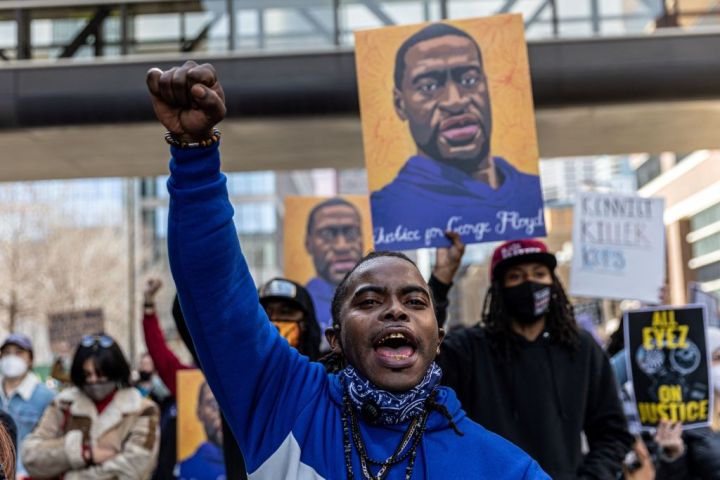
Demonstrators hold signs honoring George Floyd and other victims of racism and police violence as they gather during a protest outside Hennepin County Government Center in Minneapolis.
52. March 28
 Source:Getty
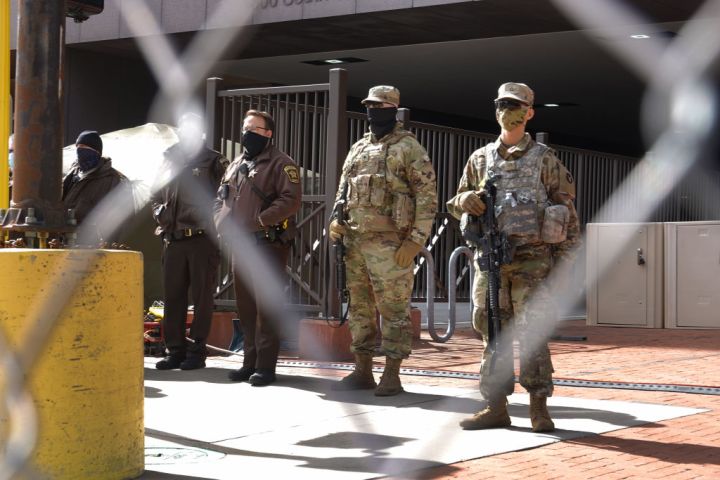
Police and National Guard troops stand watch outside of the Hennepin County Government Center while activists march past in Minneapolis.
53. March 28
 Source:Getty
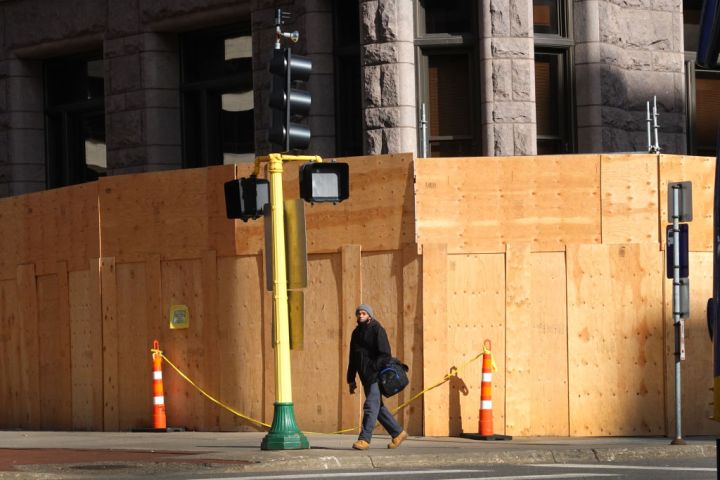
Plywood covers a building across from the Hennepin County Government Center in preparation for the trial of former Minneapolis police officer Derek Chauvin in Minneapolis.
54. March 25
 Source:Getty
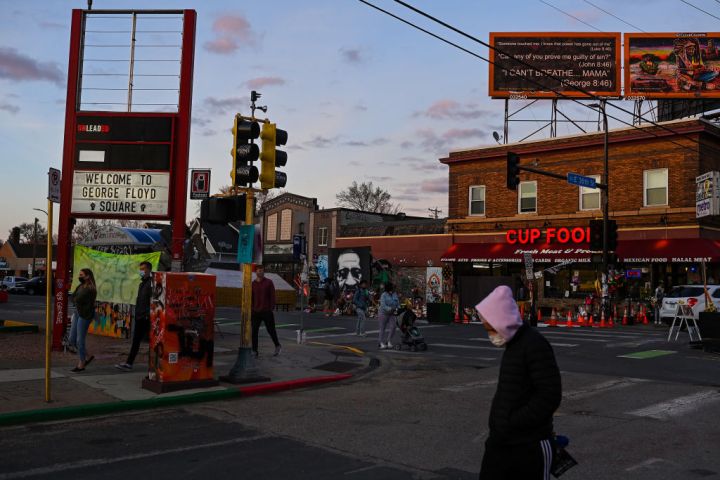
People walk through the intersection of 38th Street and Chicago Avenue, also known as George Floyd Square, as the sun sets in Minneapolis.
55. March 22 – all jurors selected
56. March 19
57. March 17
58. March 15
59. March 11
Hennepin County District Judge Peter Cahill reinstates the third-degree murder charges he previously dropped. The addition increases the likelihood of a conviction.
60. March 8
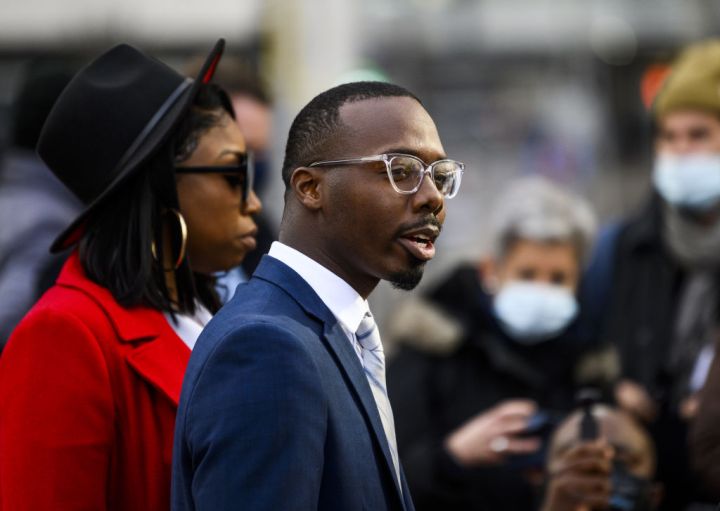 Source:Getty
Bridgett Floyd (L), the sister of George Floyd, looks on as Jacari Harris, executive director of the George Floyd Foundation, speaks during a press conference outside the Hennepin County Government Center in Minneapolis.
61. March 8
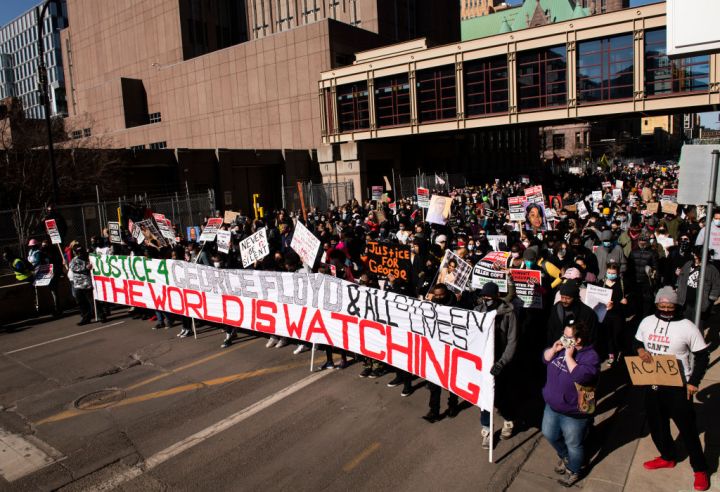 Source:Getty
People march during a demonstration in honor of George Floyd in Minneapolis.
62. March 8
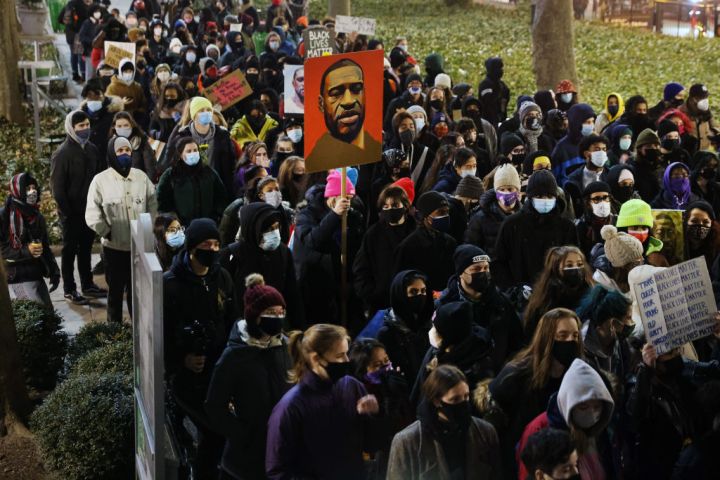 Source:Getty
People gather in a Manhattan park to protest on the first day of the trial for the killing of George Floyd, in New York City.
63. March 8
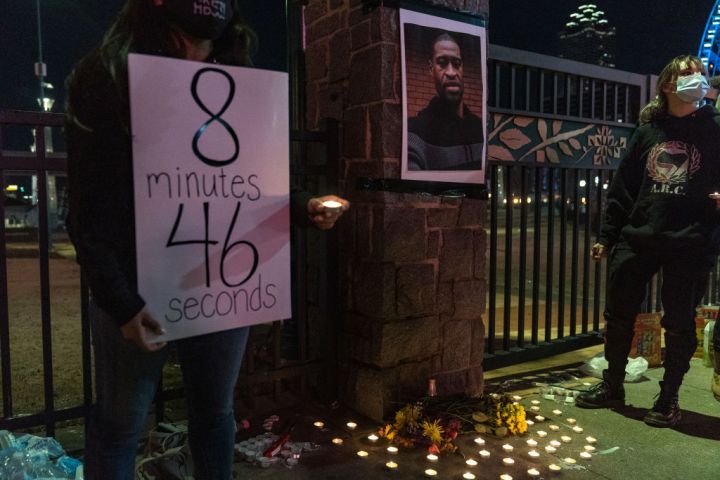 Source:Getty
Demonstrators hold a vigil in honor of George Floyd in Atlanta.
64. March 7
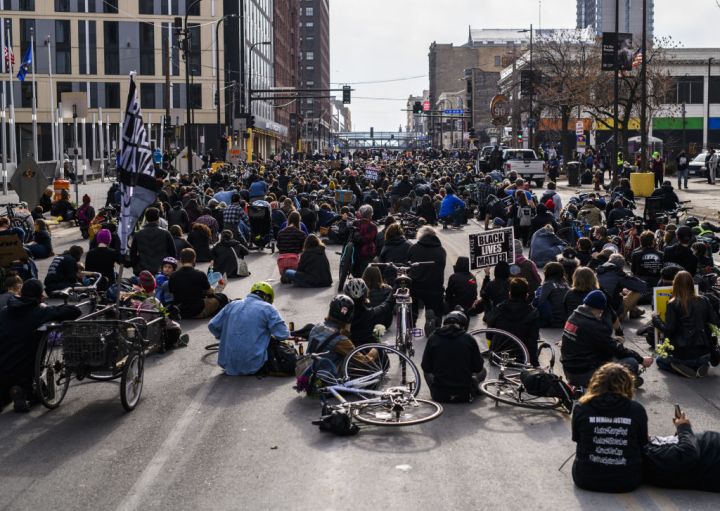 Source:Getty
Demonstrators kneel at an intersection as the names of people killed by police are listed off during a march in honor of George Floyd in Minneapolis.
65. March 7
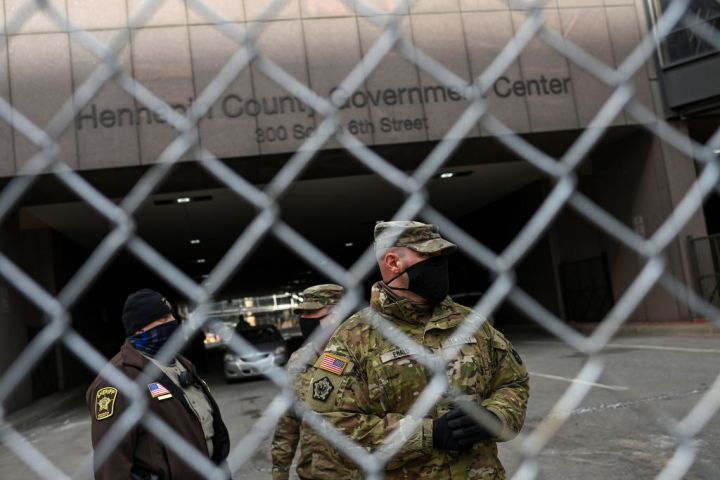 Source:Getty
A law enforcement officer stands with members of the National Guard outside the Hennepin County Government Center surrounded by fencing in Minneapolis.
66. March 7
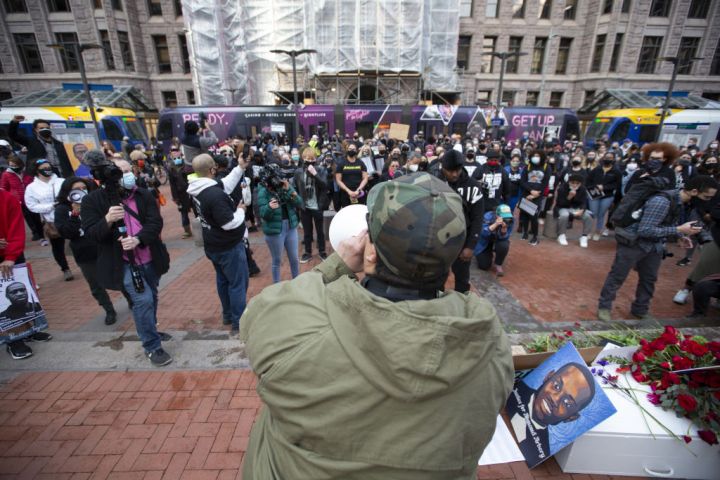 Source:Getty
St. Paul Public Schools Board Member Chauntyll Allen speaks to the crowd after they returned to the Hennepin County Government Center during a silent march in memory of George Floyd a day before jury selection for the trial of former Minneapolis police officer Derek Chauvin begins in Minneapolis.
67. March 7
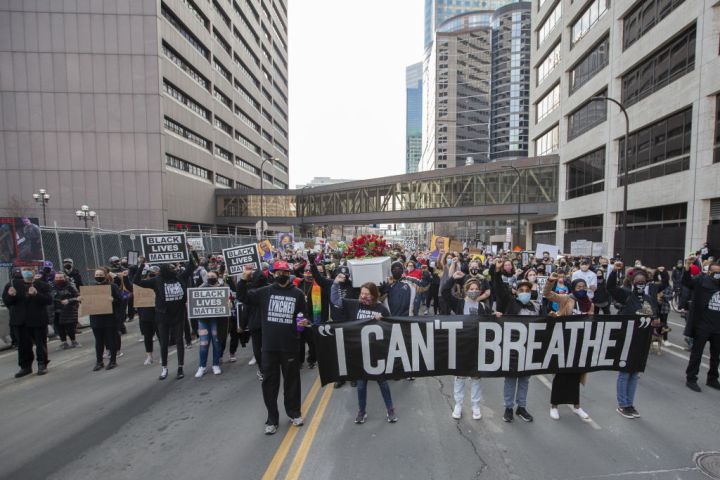 Source:Getty
Protesters march through the city during a silent march in memory of George Floyd a day before jury selection for the trial of former Minneapolis police officer Derek Chauvin begins in Minneapolis.
68. March 7
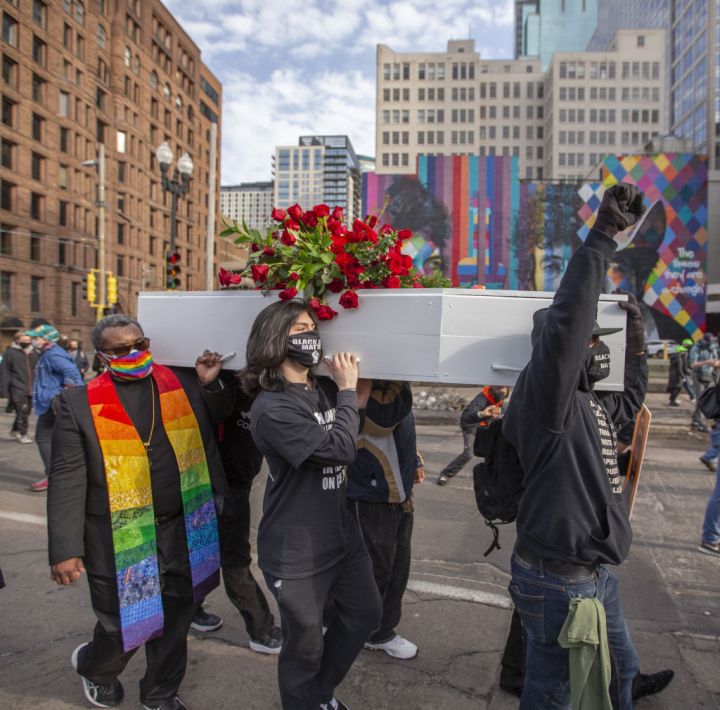 Source:Getty
Protesters carry a fake casket during a silent march in memory of George Floyd a day before jury selection for the trial of former police officer Derek Chauvin begins in Minneapolis.
69. March 7
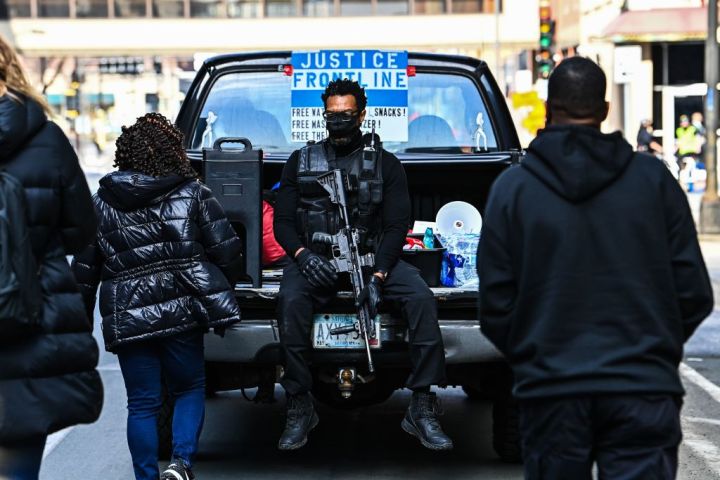 Source:Getty
A demonstrator carries a rifle during the “I Cant Breathe – Silent March for Justice” protest in front of the Hennepin County Government Center in Minneapolis.
70. March 7
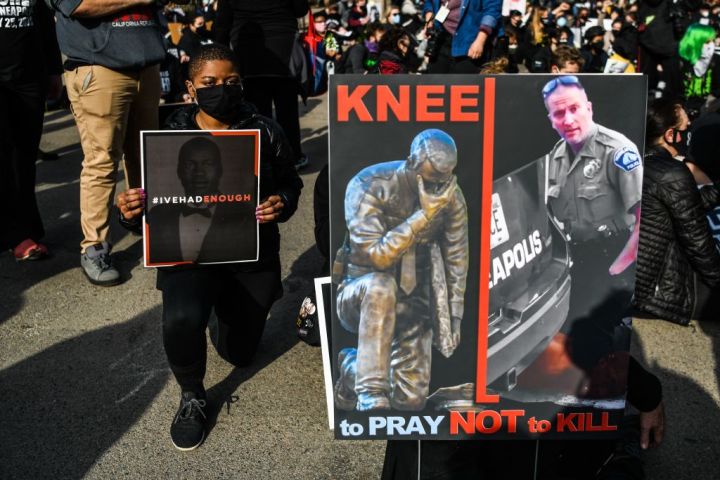 Source:Getty
Demonstrators participate in the “I Cant Breathe – Silent March for Justice” protest in front of the Hennepin County Government Center in Minneapolis.
71. March 6
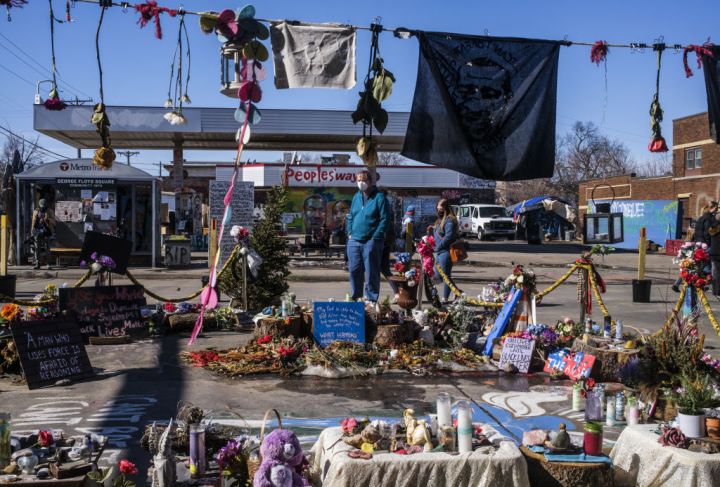 Source:Getty
People visit George Floyd Square, the memorial created around the site where he was killed in Minneapolis.
72. March 6
 Source:Getty
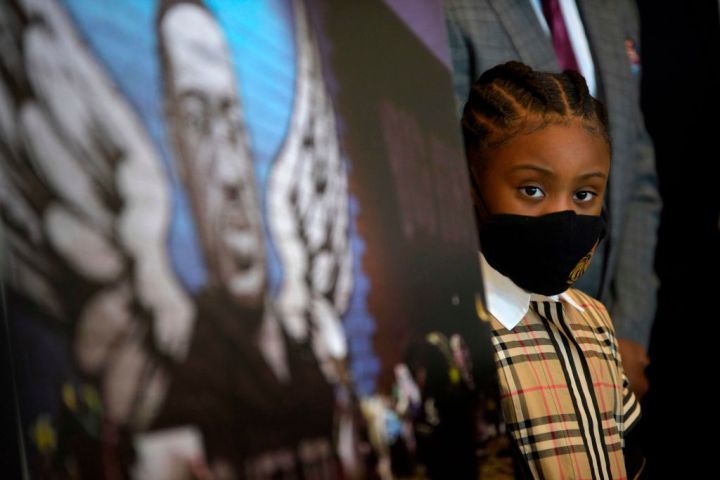
Gianna Floyd, daughter of George Floyd, stands next to a podium during a news conference in downtown Houston.
73. March 6
 Source:Getty
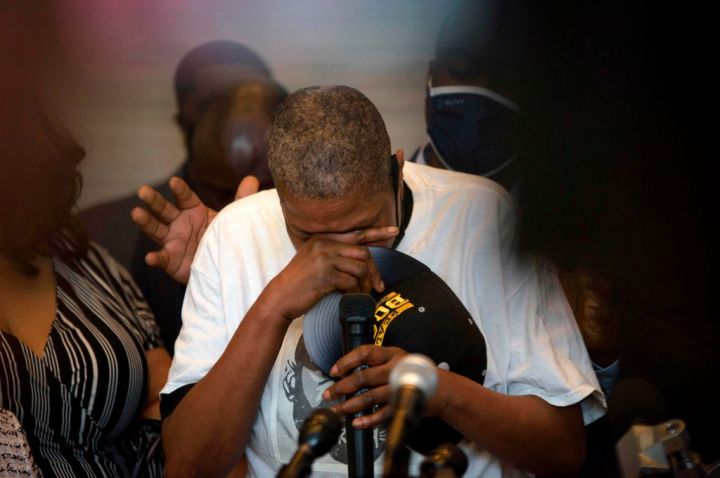
LaTonya Floyd, sister of George Floyd, wipes tears from her eyes after speaking at a news conference in downtown Houston.
74. March 6
 Source:Getty
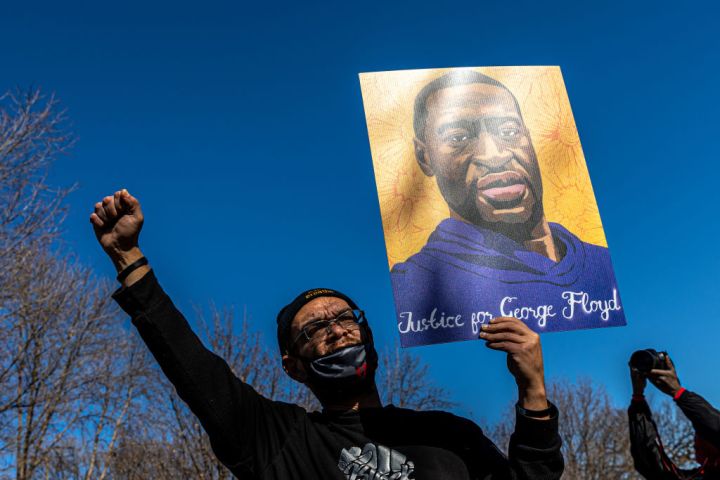
Chaz Neal, a Redwing community activist, holds a sign with George Floyd’s picture on it outside the Minnesota Governor’s residence during a protest in St.Paul, Minnesota.
75. March 3
 Source:Getty
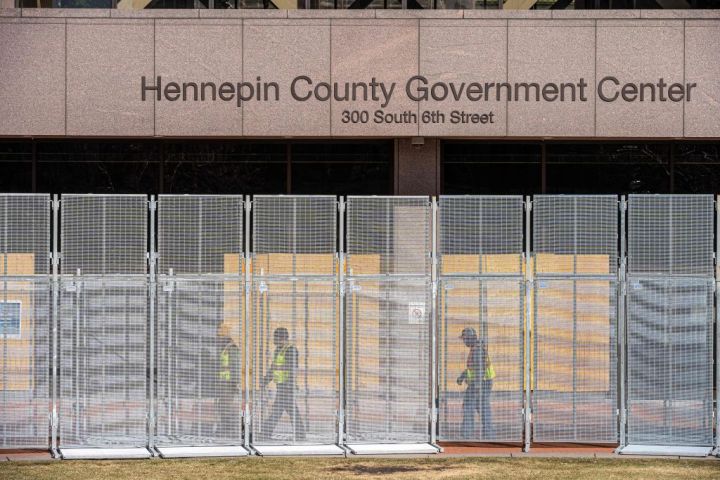
Workers install security fencing at the Hennepin County Government Headquarters in Minneapolis. Security measures are being increased and more police and National Guard soldiers are expected in downtown Minneapolis before jury selection begins at former Minneapolis Police officer Derek Chauvin’s murder trial in the death of George Floyd.