Fell's Point Black History | America 250 Baltimore Landmarks
America’s 250th: Fell’s Point & Federal’s Black History Helped Shape Baltimore

- Fell's Point was a diverse, thriving port that employed many free and enslaved African Americans in maritime industries.
- The neighborhood's historic row houses provided affordable housing for Black ship caulkers vital to Baltimore's shipbuilding.
- Frederick Douglass, the renowned abolitionist, spent formative years in Fell's Point, witnessing both slavery's horrors and the path to freedom.
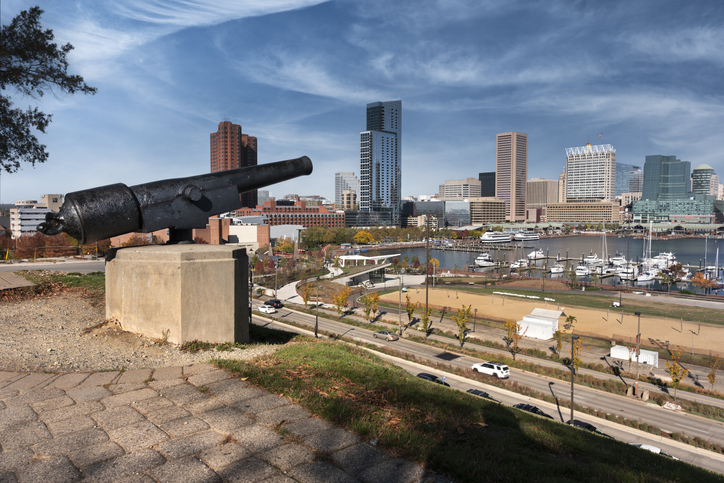
As America prepares to celebrate its 250th anniversary, Radio One Baltimore is highlighting the local landmarks and neighborhoods that helped shape our nation’s story. Among them is Fell’s Point, one of Baltimore’s oldest waterfront communities and a neighborhood whose rich African American history is woven into the city’s maritime legacy.
Founded in the 1760s, Fell’s Point became Baltimore’s first deep-water port and quickly grew into an international shipping hub. Its bustling waterfront attracted a diverse population, including both free and enslaved Black residents who played a vital role in the city’s thriving maritime economy. Many found work as shipbuilders, caulkers, sailors, laborers and skilled craftsmen whose expertise helped establish Baltimore as one of the nation’s leading ports.
To commemorate the 220th anniversary of Fell’s Point’s incorporation into Baltimore City alongside Jones Town and Baltimore Town, the Fell’s Point Preservation Society hosted a lecture series exploring the neighborhood’s African American heritage and the lasting impact Black residents had on the community’s development.
One of the series focused on the historic row of timber-framed homes along South Wolfe Street. Built in 1797, the houses provided affordable housing and opportunities for many African American ship caulkers, whose specialized work waterproofing wooden ships was essential to Baltimore’s shipbuilding industry. Historians have also highlighted the homes’ architectural significance and their place within the broader history of working-class communities throughout the Mid-Atlantic region.
The lectures also examined the experiences of Baltimore’s Black community from the 18th century through the Civil War, detailing how free and enslaved African Americans navigated life in one of the nation’s busiest port cities while contributing to its economic growth.
Perhaps no story is more closely connected to Fell’s Point than that of abolitionist Frederick Douglass. Before escaping slavery, Douglass spent part of his youth in the neighborhood, where he worked in Baltimore’s shipyards and witnessed both the harsh realities of slavery and the opportunities that ultimately fueled his pursuit of freedom. His time in Fell’s Point would shape the man who became one of America’s most influential abolitionists, authors and orators.
Today, visitors can still walk the cobblestone streets of Fell’s Point and experience many of the historic buildings that tell the story of Baltimore’s maritime past and the generations of African Americans whose labor, resilience and determination helped build the city.
As part of Radio One Baltimore’s America 250: Baltimore Landmarks series, we’re celebrating the places that preserve the stories often left out of history books. Fell’s Point stands as a reminder that Baltimore’s waterfront is more than a scenic destination, it’s a place where the contributions of Black Americans helped shape both the city and the nation. Click here for more info.
America’s 250th: Fell’s Point & Federal’s Black History Helped Shape Baltimore was originally published on 92q.com